


Klyn OS
I Spent 12 Hours Inside an AI Data Center. We’re Worried About the Wrong Divide.
Twelve hours inside an AI data center turned a question of scale into one of distribution: compute as cognitive infrastructure, and the discipline to keep thinking for ourselves.
I spent 12 hours inside an AI data center.

I went in thinking about the scale of AI. I came out thinking about its distribution.
Inside, the place felt endless: rows of servers, fans pushing hot air, and the constant roar of GPUs. At one point, I felt like I was walking through the stomach of a steel animal.
But what stayed with me wasn’t the noise. It was the empty racks. I was told the facility wasn’t even running at full capacity.
Outside, capital is pouring into AI infrastructure. Inside, some racks were still empty. That contradiction made me think about food.
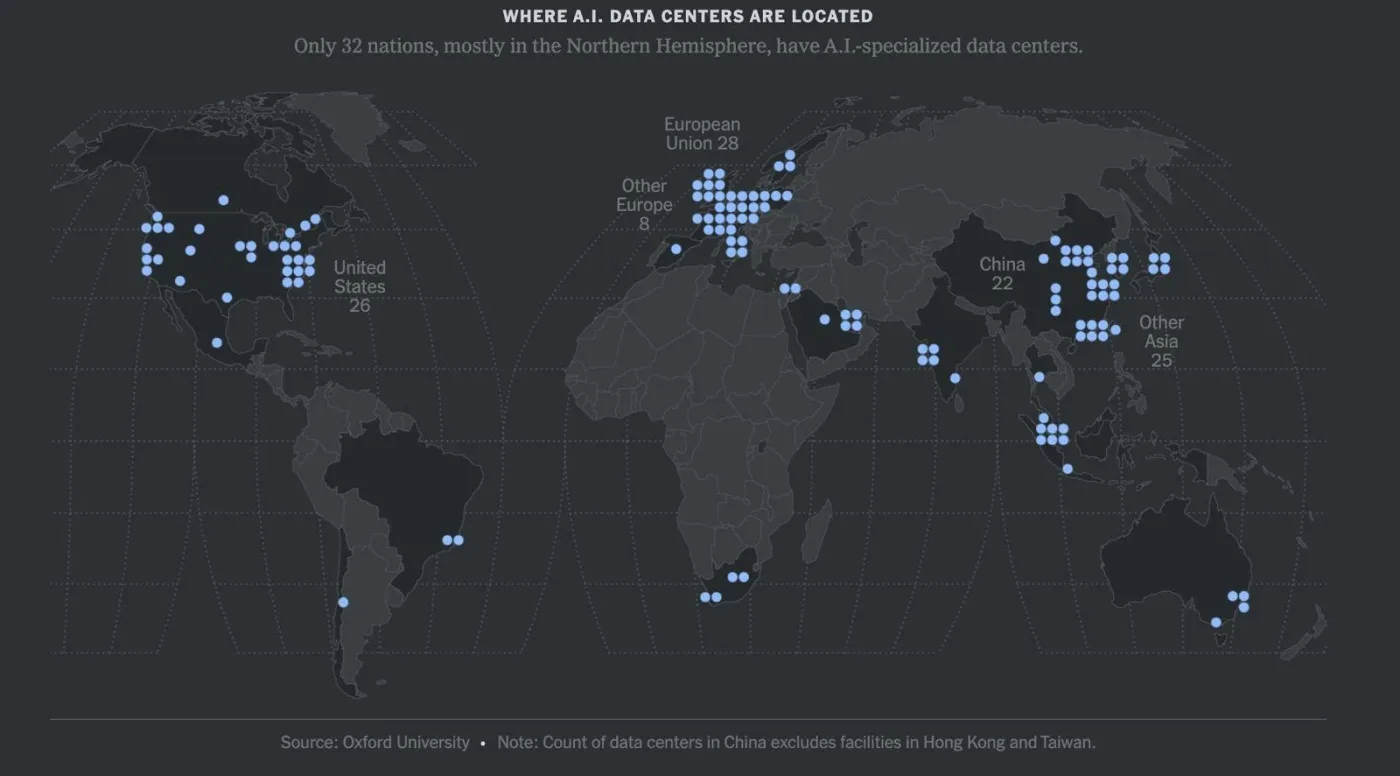
The world already produces enough food to feed everyone. Hunger persists because access is unequal. What if compute follows the same path?
As AI agents take on more intellectual work, compute stops being just an engineering resource. It becomes cognitive infrastructure—something that shapes who can learn faster, build with smaller teams, and make decisions with amplified intelligence.
We still measure development through GDP per capita. Maybe one day we’ll also look at tokens per capita, or AI agents per person.
But access is only half the story.
Even for those of us with abundant access to AI, there is another risk: cognitive surrender—outsourcing not just tasks, but judgment.
Just as abundance shouldn’t make us waste food, easy access to intelligence shouldn’t make us waste our own ability to think.
The answer isn’t to use less AI. It’s to use AI without giving up the parts of thinking that make us human: our taste, our judgment, and our responsibility for the choices we make.
So here’s the question I left with:
Are you using AI to think better—or using it to avoid thinking?